Sensitive Drill Table
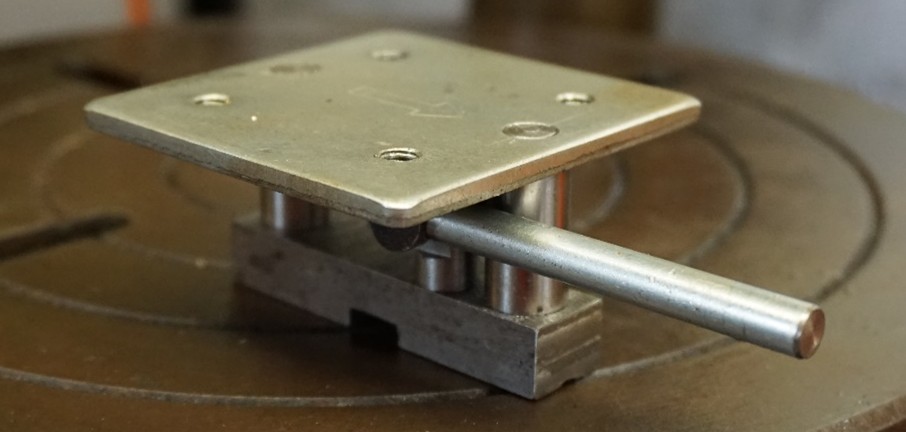
A requirement for a project was the need to drill multiple holes less than 1mm in diameter (between 0.3mm and 0.5mm). Drills less than 1mm in diameter are especially weak, and attempting to use them conventionally in a drill press is likely to snap the drill.
The primary reason for this is due to the leverage applied when feeding the drill column, a lack of sensitivity when using hand levers and any additional weight applied to the drill from the quill and drill chuck (where not compensated by the return spring). These factors can be removed or reduced by feeding the workpiece into the stationary drill, rather than feeding the drill into the stationary workpiece.
The sensitive drill table is therefore used for this purpose. The workpiece is secured to the table, and the table then feeds the workpiece into the drill.
This features of the sensitive table are outlined below:
- The protruding lever is attached to a cam, which lowers or raises the table with precise control.
- Long travel of the lever translates to short travel of the table, providing fine control.
- Ground pins and bushings provide smooth travel and minimise horizontal rocking.
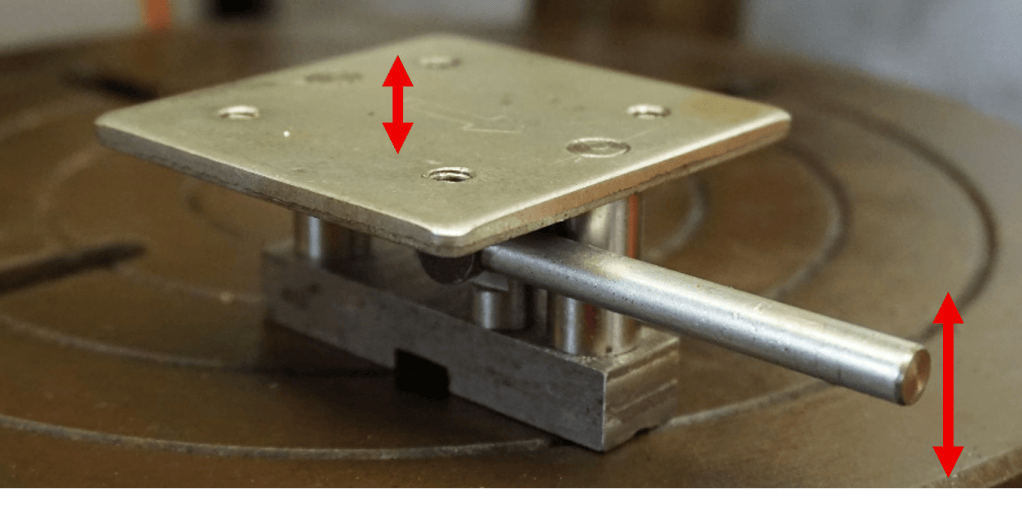
The base of the table is a simple bar of milled steel to allow the table to be clamped in a toolmaker’s vice. This table was an excellent exercise in using scrap parts, with the guide pins and bushings made from salvaged pushrods and guides from the engine of a Massey Ferguson tractor. The table allows plenty of sub-1mm diameter holes to be drilled without breakage or wandering.

